

Traffic falling after a redesign is one of the most common and most preventable disasters in SEO. The site looks better, the launch went smoothly, and within a few weeks enquiries have dried up. This is what causes it and how to work out which problem you have.
First, confirm what actually dropped
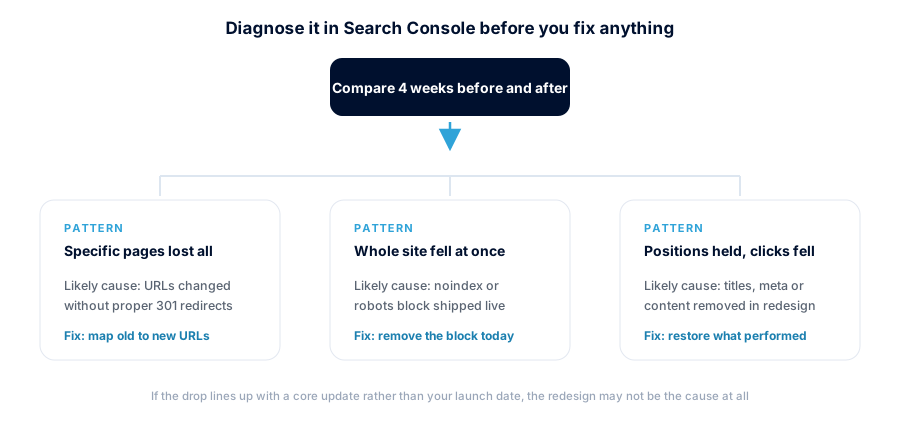
Before diagnosing, establish the facts in Google Search Console. Compare the four weeks before launch with the four weeks after, and look at three things separately: total clicks, average position, and which specific pages and queries lost the most.
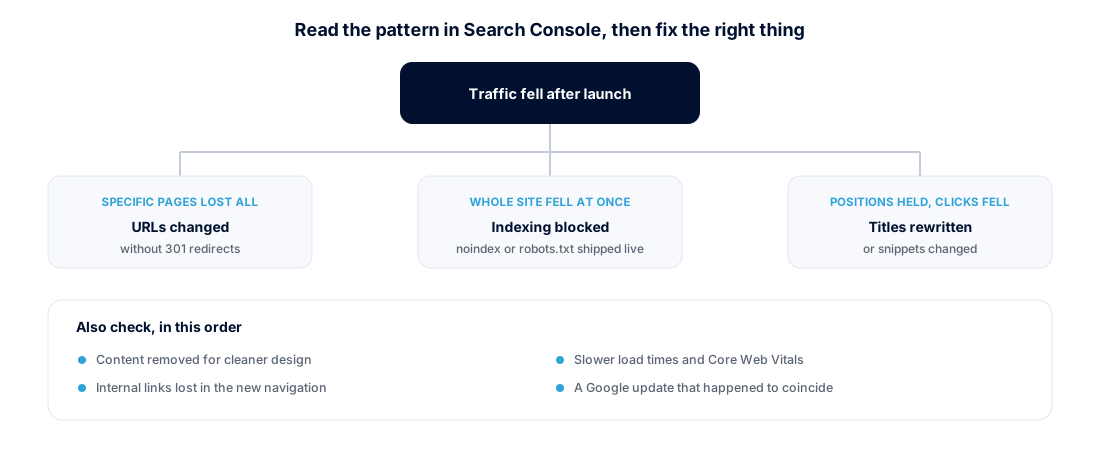
The pattern tells you a great deal. If positions held but clicks fell, the issue is usually titles, descriptions or a change in how results display. If specific pages lost everything while others were unaffected, you likely have a URL or redirect problem. If the entire site dropped uniformly, the cause is usually technical and site wide.
Cause one: URLs changed without redirects
This is the single most frequent cause. A redesign restructures the site, page addresses change, and the old URLs either return a 404 or redirect to the homepage. Every link earned by those pages, and every ranking they held, is lost.
Check by crawling your old sitemap or exporting your top pages from Search Console before the launch date and testing each one. Every old URL should return a 301 redirect to the closest equivalent new page, not to the homepage. Redirecting everything to the homepage is treated as a soft 404 and passes almost nothing.
This is recoverable. Map the old URLs to new ones and implement proper 301s, and rankings typically return over several weeks.
Cause two: the staging site settings shipped to production
Development sites are usually blocked from search engines, and that block sometimes goes live with the redesign. Check two things: whether WordPress has search engine visibility disabled under Settings and Reading, and whether your robots.txt is disallowing crawling. Also check for a stray noindex tag in the page source.
If this is the cause, traffic tends to fall off a cliff rather than decline gradually, and it usually appears within days. Fixing it is immediate, though recovery takes a few weeks as pages are recrawled.
Cause three: content was removed in the name of clean design
Redesigns frequently reduce word count substantially. Long service pages become short elegant ones, FAQs are cut, and supporting pages are consolidated. Visually this is often an improvement. For search it removes the material you were ranking for.
Compare your old page content against the new. If a page that ranked well went from 1,200 words to 300, that is very likely your cause. The fix is not padding, it is restoring the substance that answered the queries you were ranking for.
Cause four: internal linking collapsed
Old sites often accumulate useful internal links over years. A redesign built around a clean new navigation frequently discards them, leaving important pages with very few internal links pointing at them. Those pages lose authority and drift down.
Look for pages that are now reachable only through the main menu or, worse, not linked from anywhere. Rebuilding sensible contextual internal links usually recovers this.
Cause five: the new site is slower or breaks on mobile
Modern designs frequently ship heavier. Large hero images, sliders, animation libraries and multiple font families add weight, and Core Web Vitals suffer. Run the new site through PageSpeed Insights and compare against archived data if you have it.
Speed alone rarely causes a dramatic collapse, but combined with other issues it deepens the decline and slows the recovery. Our technical SEO service deals with this category of problem specifically.
Cause six: it was not the redesign at all
Check the timing carefully against known Google algorithm updates. If your drop aligns with a core update rather than your launch date, the redesign may be coincidental. The distinction matters because the remedy is entirely different, and attributing a technical failure to an algorithm change is one of the most common ways agencies avoid accountability.
How long recovery takes
With redirects fixed, most sites recover substantially within four to eight weeks as Google reprocesses the mapping. Content restoration takes longer because pages must be recrawled and reassessed. Indexing blocks resolve fastest once removed. If nothing has improved after three months of correct fixes, the cause was probably diagnosed wrongly.
How to avoid this next time
Before any redesign, export your top hundred pages by clicks from Search Console, record current rankings for your commercial terms, and preserve the content of pages that perform. Build the redirect map before launch rather than after. Test the staging site for noindex tags and robots directives the day it goes live, then check Search Console daily for the first fortnight.
Migrations are the highest risk moment in SEO and the cheapest to get right if planned. If you have a redesign coming, or a drop you cannot explain, an audit will identify which of these applies to you, and we are happy to look at the numbers before you commit to anything.